DeskFlow 异步网络接口(01) — 套接字封装

1. 整体设计

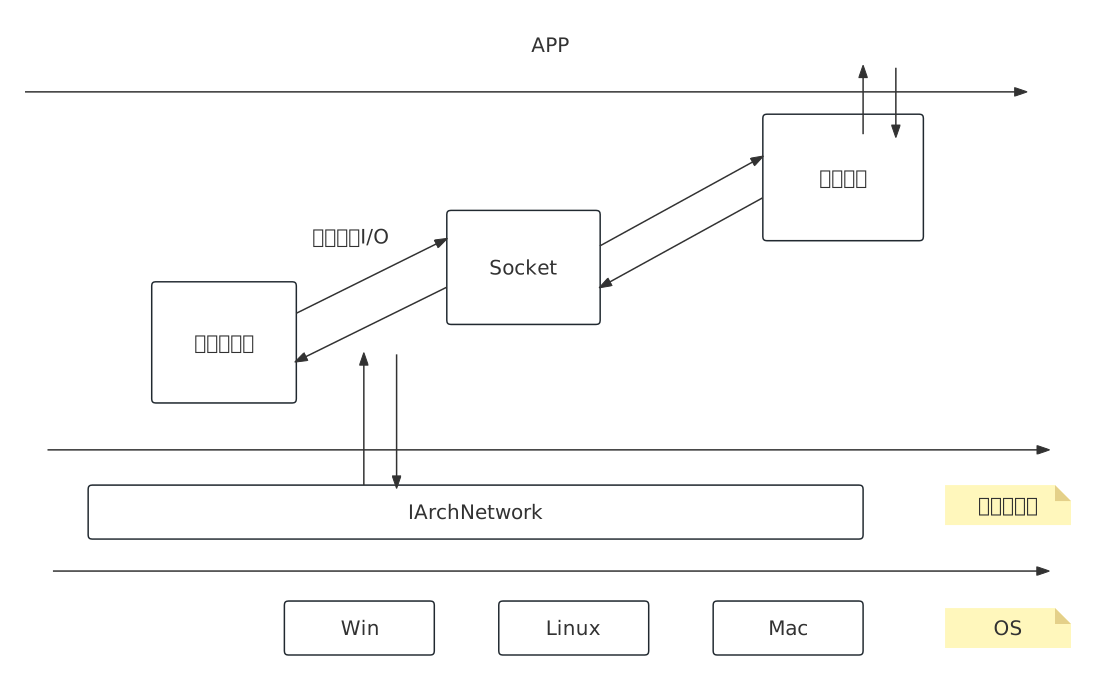
网络模块涉及到 4 个部分:

  1.  网络地址: NetworkAddress,统一不同平台上网络地址的表示。
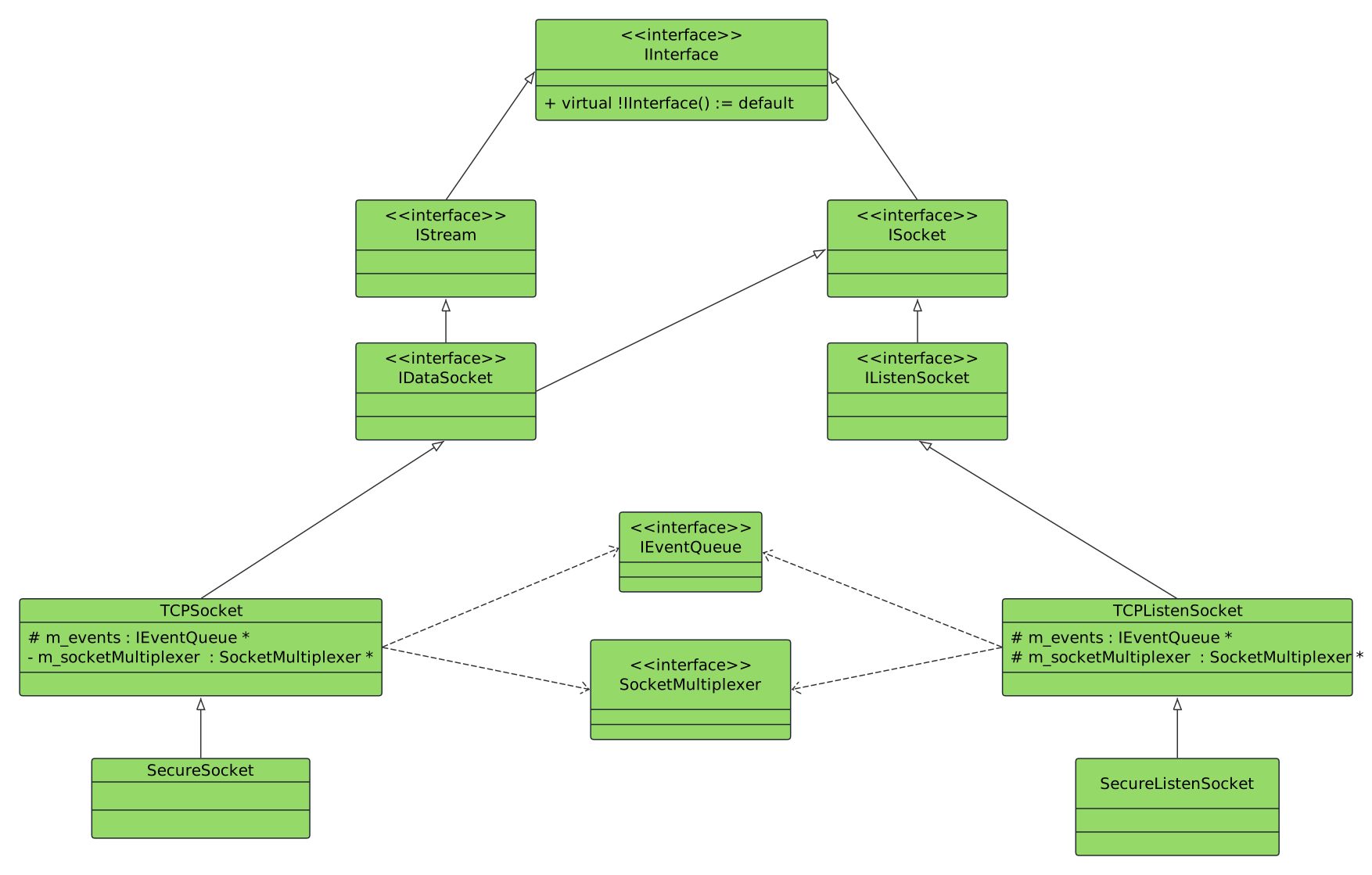
  2.  网络套接字: ISocket,规定了套接字类型的核心接口,分为监听Socket和数据Socket,依赖于ARCH层和多路复用器处理网络事件。
    • IDataSocket,数据Socket,实现异步数据I/O功能。
    • IListenSocket,监听Socekt,实现服务端功能。
  3.  多路复用器: SocketMultiplexer,监控网络I\O,例如客户端连接、数据收发,也是基于ARCH层的。
  4.  多路复用器任务: ISocketMultiplexerJob,这是对于网络I/O的任务的封装。
  5. 工厂模式: 通过ISocketFactory创建不同的网络套接字。
  6. 事件机制: 接收的网络数据保存到缓冲区,然后通过事件通过业务层数据已到达。同时事件机制也要处理一些网络异常事件。

2. 类型设计

网络接口抽象如下,由派生类去实现不同类型的网络接口:

 1
 2
 3
 4
 5
 6
 7
 8
 9
10
11
12
13
// 网络接口的抽象基类    
class ISocket : public IInterface
{
public:
    virtual void bind(const NetworkAddress &) = 0;
    virtual void close() = 0;

    /*  
     *  返回this,用于事件驱动架构中标识事件源,
     *  与EventQueue配合实现事件分发,作为回调函数上下文参数传递对象指针。
     */
    virtual void *getEventTarget() const = 0;
};

2.1. 监听Socket

 1
 2
 3
 4
 5
 6
 7
 8
 9
10
class IListenSocket : public ISocket
{
public:
    /* 向多路复用器中注册TcpServer任务 */
    virtual std::unique_ptr<IDataSocket> accept() = 0;

    void bind(const NetworkAddress &) override = 0;
    void close() override = 0;
    void *getEventTarget() const override = 0;
};

2.1.1. TCP监听Socket实现

 1
 2
 3
 4
 5
 6
 7
 8
 9
10
11
12
13
14
15
16
17
18
19
20
21
22
23
24
25
26
27
28
29
30
31
32
33
34
35
36
class TCPListenSocket : public IListenSocket
{
public:
    TCPListenSocket(IEventQueue *events, SocketMultiplexer *socketMultiplexer, IArchNetwork::AddressFamily family);
    TCPListenSocket(TCPListenSocket const &) = delete;
    TCPListenSocket(TCPListenSocket &&) = delete;
    ~TCPListenSocket() override;

    TCPListenSocket &operator=(TCPListenSocket const &) = delete;
    TCPListenSocket &operator=(TCPListenSocket &&) = delete;

    // ISocket overrides
    void bind(const NetworkAddress &) override;  // bind并且开始listen,也就是给多路复用器添加listen任务。
    void close() override;
    void *getEventTarget() const override;

    /* 
     * 启动TCPServer的监听服务。
     * 内部调用了 setListeningJob()  
     */
    std::unique_ptr<IDataSocket> accept() override;

    ISocketMultiplexerJob *serviceListening(ISocketMultiplexerJob *, bool, bool, bool);
protected:
  /* 
   *  给多路复用器添加一个任务(accept任务),用于监听客户端的连接。  
   *  这个任务的任务函数就是serviceListening。  
   */
    void setListeningJob();   

    IEventQueue *m_events;   
    ArchSocket   m_socket;                      // Socket实体
    SocketMultiplexer *m_socketMultiplexer;     // 关联的多路复用器
private:
    std::mutex m_mutex;
};

2.1.2. 加密监听Socket实现

 1
 2
 3
 4
 5
 6
 7
 8
 9
10
11
12
13
14
15
16
17
18
19
20
21
22
// SecurityLevel枚举类,用于控制客户端与服务器的通信安全策略。
enum class SecurityLevel
{
  PlainText,  // 不加密
  Encrypted,  // 启用TLS加密
  PeerAuth    // 双向认证加密
};


class SecureListenSocket : public TCPListenSocket
{
public:
    SecureListenSocket(
        IEventQueue *events, SocketMultiplexer *socketMultiplexer, IArchNetwork::AddressFamily family,
        SecurityLevel securityLevel = SecurityLevel::PlainText
    );  

    std::unique_ptr<IDataSocket> accept() override;

private:
    const SecurityLevel m_securityLevel;
};

2.2. 数据Socket

 1
 2
 3
 4
 5
 6
 7
 8
 9
10
11
12
13
14
15
16
17
18
19
20
21
22
23
24
25
26
27
28
29
30
31
32
33
34
35
36
37
38
39
40
41
42
43
// 数据Socket基类。  
class IDataSocket : public ISocket, public deskflow::IStream
{
public:
      /* 连接失败事件的附加信息 */
    class ConnectionFailedInfo
    {
    public:
        explicit ConnectionFailedInfo(const char *what) : m_what(what)
        {
          // do nothing
        }
        std::string m_what;
    };

    explicit IDataSocket(const IEventQueue *events)
    {
      // do nothing
    }

    virtual void connect(const NetworkAddress &) = 0;

    void bind(const NetworkAddress &) override = 0;

    /* 
     *  正常情况下这两货不会在这里重写,实际是在TCPSocket类型里重写。  
     *  但是,VC++6 对多重继承的支持存在缺陷,无法正确解析具有相同签名的方法。   
     *  在 VC++6 中,如果一个类从多个基类继承了相同签名的方法, 编译器会错误地认为这些方法是“未使用的局部变量”,并警告或移除它们。   
     *  所以这里通过提供非纯虚函数的默认实现,绕过编译器对多重继承的错误处理。  
     */
    void close() override;
    void *getEventTarget() const override;

    /* 流操作 */ 
    uint32_t read(void *buffer, uint32_t n) override = 0;
    void write(const void *buffer, uint32_t n) override = 0;
    void flush() override = 0;
    void shutdownInput() override = 0;
    void shutdownOutput() override = 0;
    bool isReady() const override = 0;
    uint32_t getSize() const override = 0;
    virtual bool isFatal() const = 0;
};

2.2.1. TCP数据Socket

实现了TCPSocket的异步的连接、I/O等等。

 1
 2
 3
 4
 5
 6
 7
 8
 9
10
11
12
13
14
15
16
17
18
19
20
21
22
23
24
25
26
27
28
29
30
31
32
33
34
35
36
37
38
39
40
41
42
43
44
45
46
47
48
49
50
51
52
53
54
55
56
57
58
59
60
61
62
63
64
65
66
67
68
69
70
71
72
73
74
75
76
77
78
79
80
81
82
83
84
85
86
87
88
89
90
91
92
class TCPSocket : public IDataSocket
{
public:
    TCPSocket(
        IEventQueue *events, SocketMultiplexer *socketMultiplexer,
        IArchNetwork::AddressFamily family = IArchNetwork::AddressFamily::INet
    );
    TCPSocket(IEventQueue *events, SocketMultiplexer *socketMultiplexer, ArchSocket socket);
    ~TCPSocket() override;

    // ...
    // ...

    uint32_t read(void *buffer, uint32_t n) override;          // 从接收缓冲区读取n个字节到buffer中。
    void write(const void *buffer, uint32_t n) override;       // 将buffer中的字节写入发送缓冲区,并触发异步发送流程(发送事件)
    void flush() override;                                     // 等待发送缓冲区刷新完成。
    void shutdownInput() override;                             // 关闭Socket的接收端,清空发送缓冲区,并从多路复用器移除该Socket对应的任务。
    void shutdownOutput() override;
    bool isReady() const override;      // 接收缓冲区有数据
    uint32_t getSize() const override;  // 接收缓冲区字节数

    // 发起连接,并向多路复用器注册读写任务。
    void connect(const NetworkAddress &) override;

    /*  
    *  创建并返回与套接字关联的异步I/O任务对象(多路复用器任务)。 
    *  如果suocket还没有建立连接,就创建连接建立任务,也就是serviceConnecting。
    *  如果已经建立建立,那就创建读写任务,也就是serviceConnected。
    */
    virtual ISocketMultiplexerJob *newJob(); 

protected:

    /* 表示任务执行的结果,多路复用器是以 “任务链” 的形式运行任务 */
    enum class JobResult
    {
      Break = -1, // 强制终止任务链,用于处理不可恢复错误(如断开连接)
      Retry,      // 保持当前任务继续执行,适用于暂时性阻塞(如等待I/O)
      New         // 需要创建新任务,上一个任务已经完成。
    };

    // ...

    /* 
    * 非阻塞I/O,并处理网络断开情况,由serviceConnected调用。  
    * doRead():  读取网络数据保存到接收缓冲区中,当输入缓冲区从空变为有数据时,通过事件队列通知上层有数据到达当输入缓冲区从空变为有数据时,通过事件队列通知上层有数据到达。  
    * doWrite():将发送缓冲区中的数据发送出去。 
    */
    virtual JobResult doRead();  
    virtual JobResult doWrite();

    /*  
    * 注册任务到多路复用器。
    * 如果参数为nullptr,就移除多路复用器中与当前Socket绑定的任务。
    * 如果不为nullptr,就注册该任务到多路复用器。
    */ 
    void setJob(ISocketMultiplexerJob *);

    // ...
    // 获取/设置状态的接口
    // ...

    void sendEvent(EventTypes);

    /* 刷新发送缓冲区(从输出缓冲区移除已成功发送的字节数),并唤醒所有等待m_flushed的线程。*/
    void discardWrittenData(int bytesWrote);

    IEventQueue *m_events;
    StreamBuffer m_inputBuffer;     // 接收缓冲区
    StreamBuffer m_outputBuffer;    // 发送缓冲区

private:
    void init();  // 初始化TCP套接字的状态并配置网络参数,并且禁用禁用Nagle算法。

    void sendConnectionFailedEvent(const char *);
    void onInputShutdown();   // 清空接收缓存区。
    void onOutputShutdown();
    void onConnected();       // 建立连接后更新Socekt状态。
    void onDisconnected();    // 断开连接后更新Socket状态。

    /* 多路复用器任务 */
    ISocketMultiplexerJob *serviceConnecting(ISocketMultiplexerJob *, bool, bool, bool);
    ISocketMultiplexerJob *serviceConnected(ISocketMultiplexerJob *, bool, bool, bool);

    bool m_readable;   // Socket是否可读
    bool m_writable;
    bool m_connected;  // 连接状态
    Mutex m_mutex;
    ArchSocket m_socket;
    CondVar<bool> m_flushed; // 用于在多线程场景下同步TCP套接字的"数据刷新完成"状态。当发送缓冲区的数据被完全发送到网络后,通过 m_flushed 通知等待的线程继续执行。
    SocketMultiplexer *m_socketMultiplexer;
};

2.2.2. 加密的TCP数据Socket

继承自TCPSocket,在TCPSocket基础上增加了SSL加密。

1
2
3
4
class SecureSocket : public TCPSocket
{
    // ...
}

3. 网络地址

 1
 2
 3
 4
 5
 6
 7
 8
 9
10
11
12
13
14
15
16
17
18
19
20
21
22
23
24
25
26
27
28
29
30
31
32
class NetworkAddress
{
public:
  NetworkAddress() = default;
  explicit NetworkAddress(int port);                          // port: 端口
  NetworkAddress(const std::string &hostname, int port = 0);  // 使用主机名,端口构造
  NetworkAddress(const NetworkAddress &);
  ~NetworkAddress();

  NetworkAddress &operator=(const NetworkAddress &);

  size_t resolve(size_t index = 0);                          // 将主机名解析为网络地址(IP地址 + 端口)

  bool operator==(const NetworkAddress &address) const;
  bool operator!=(const NetworkAddress &address) const;

  bool isValid() const;                      // m_address不为空时返回true        

  const ArchNetAddress &getAddress() const;  // 返回 m_address

  int getPort() const;                       // m_port

  std::string getHostname() const;           // m_hostname

private:
  void checkPort() const;                   // 端口是否有效,0 ~ 65535

private:
  ArchNetAddress m_address = nullptr;
  std::string m_hostname;
  int m_port = 0;
};
comments powered by Disqus