qemu-8.2.2/include/qemu/queue.h是QEMU中实现的通用数据结构库,源自FreeBSD的queue.h。
1. 链表定义
 1
 2
 3
 4
 5
 6
 7
 8
 9
10
11
12
13
14
15
16
17
18
19
20
21
22
23
24
|
/*
 * 链表头: 包含一个指向首元节点的指针
 */
#define QLIST_HEAD(name, type)                                          \
struct name {                                                           \
        struct type *lh_first;  /* first element */                     \
}

/*
 * 链表初始化。
 * 首元节点指针初始化为NULL。
 */
#define QLIST_HEAD_INITIALIZER(head)                                    \
        { NULL }

/*
 * 链表节点的连接域。
 * 节点类型的结构体中包含此结构体,用于连接链表。
 */
#define QLIST_ENTRY(type)                                                    \
struct {                                                                     \
        struct type *le_next;   /* 指向下一个节点 */                           \
        struct type **le_prev;  /* 指向前驱节点的le_next字段,这是一个效率设计 */  \
}
|
1.1. 优化
Qemu-List带来的优化就是**le_prev,一般情况下,单链表是没有prev相关的字段,而双链表的prev字段是指向前驱节点的,但是Qemu-List不属于这两种情况。假如现在有一个这样的链表:A->B->C,C的le_prev指向B的le_next,而B的le_next又指向C,所以C的le_prev实际指向C自己,相对于一般的链表设计,这样设计的好处是,删除节点的效率高一点。对于非操作系统级别的程序可能少见这种设计,但是对于内核或者驱动来说,性能是非常敏感的,能优化一点是一点。那么,这种设计是如何优化删除效率的:
- 一般但链表设计中,要删除节点B,需要访问节点A,以便在移除B后建立A和C的连接:A->C。
- Qemu-List中,B的le_prev指向B自己,这样删除B时,不需要访问A,基于节点B就可以实现:A->C,基本思路如下所示:
1
2
3
4
5
6
7
8
|
QLIST_REMOVE(B, entry) {
    // 步骤1:更新后继节点C的前驱指针
    if (B.le_next != NULL)               // C存在
        C.le_prev = B.le_prev;           // 即 C.le_prev = &A.le_next,也就是让C的le_prev指向A的le_next(原本指向B的le_prev)

    // 步骤2:通过前驱指针修改A的le_next
    *B.le_prev = B.le_next;              // 相当于 A.le_next = C的地址
}
|
从上面代码可以看到,删除节点B时,整个过程不需要访问A。
下面再看一点代码,以便对于该链表的使用有一个初步了解:
1
2
3
|
/* qemu-8.2.2/block.c */
static QLIST_HEAD(, BlockDriver) bdrv_drivers =
    QLIST_HEAD_INITIALIZER(bdrv_drivers);
|
上面是一个块设备驱动相关的链表,使用QLIST_HEAD宏函数创建,宏替换后如下:
1
2
3
|
static struct {
        struct BlockDriver *lh_first;
} bdrv_drivers = { NULL };
|
2. 链表操作
2.1. 访问链表
1
2
3
|
#define QLIST_EMPTY(head)                ((head)->lh_first == NULL)
#define QLIST_FIRST(head)                ((head)->lh_first)
#define QLIST_NEXT(elm, field)           ((elm)->field.le_next)
|
2.2. 链表初始化
1
2
3
|
#define QLIST_INIT(head) do {                                           \
        (head)->lh_first = NULL;                                        \
} while (/*CONSTCOND*/0)
|
2.3. 插入操作
2.3.1. 链表头部插入新节点
1
2
3
4
5
6
|
#define QLIST_INSERT_HEAD(head, elm, field) do {                        \
        if (((elm)->field.le_next = (head)->lh_first) != NULL)          \
                (head)->lh_first->field.le_prev = &(elm)->field.le_next;\
        (head)->lh_first = (elm);                                       \
        (elm)->field.le_prev = &(head)->lh_first;                       \
} while (/*CONSTCOND*/0)
|
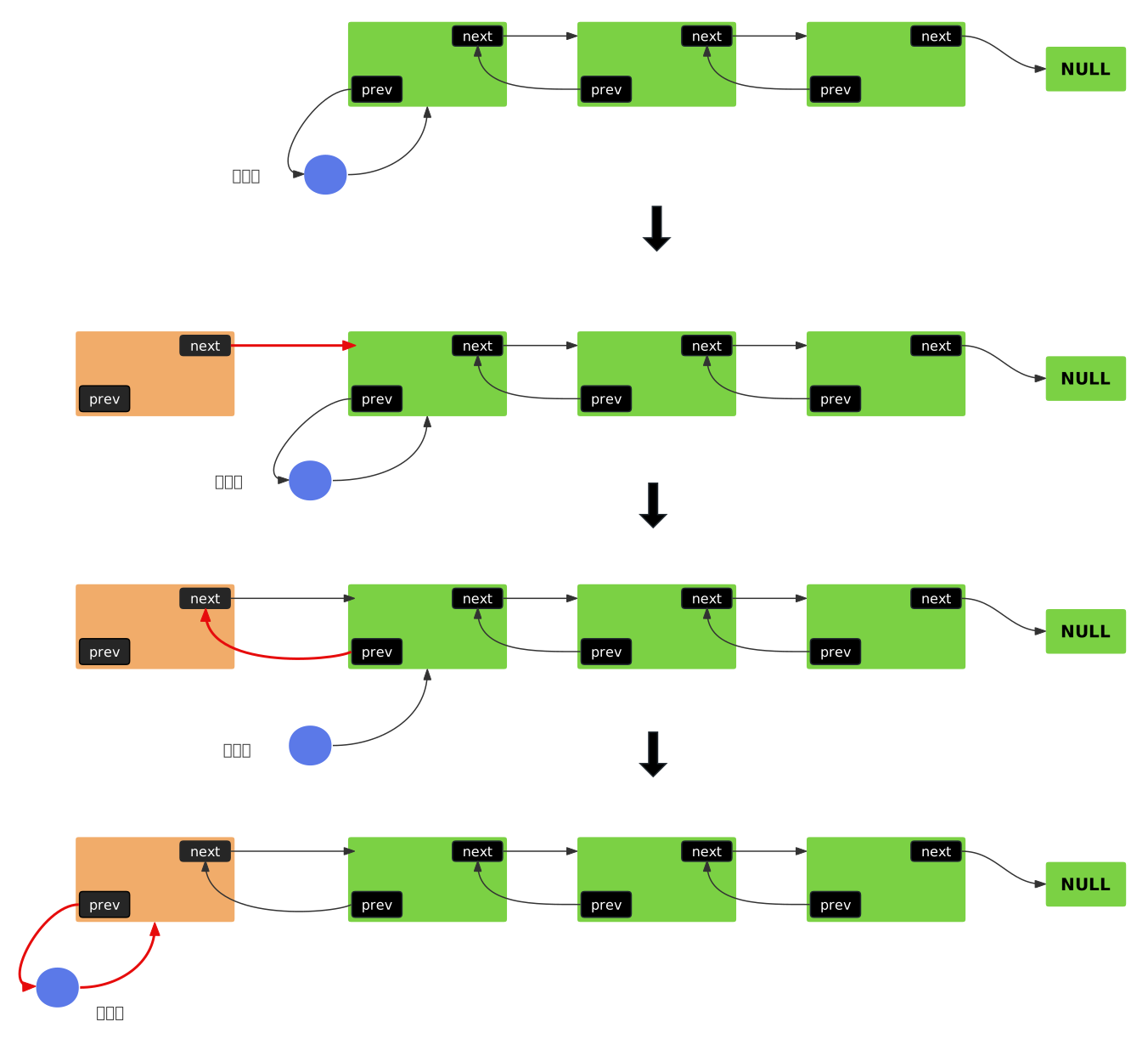
解释:
- field: 就是使用宏
QLIST_ENTRY(type)创建的链表节点连接结构,是节点中的连接域字段,通过该字段访问后继节点。
- elm: 要插入的节点。
代码逐行解释:
if (((elm)->field.le_next = (head)->lh_first) != NULL)
- 使elm的le_next字段指向原首元节点。
- 判断链表是否为空。
(head)->lh_first->field.le_prev = &(elm)->field.le_next;
- 如果链表非空,使原首元节点的le_prev字段指向新节点的le_next字段。
(head)->lh_first = (elm);
- 使链表头指向新节点。
(elm)->field.le_prev = &(head)->lh_first;
- 使新节点的le_prev字段指向链表头的lh_first字段,也就是指向自己,这就是首元节点。
2.3.2. 指定节点后插入节点
1
2
3
4
5
6
7
|
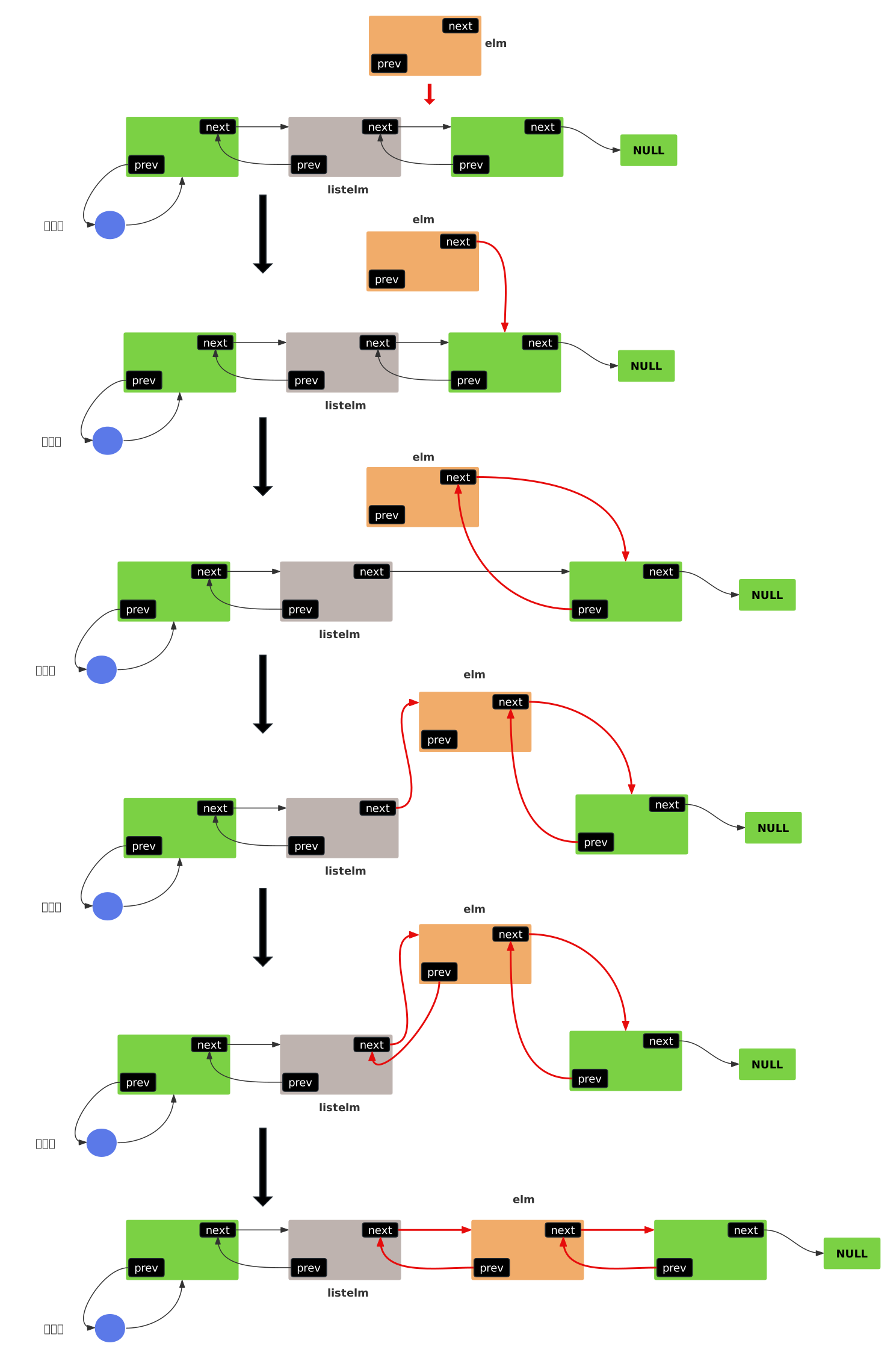
#define QLIST_INSERT_AFTER(listelm, elm, field) do {                    \
        if (((elm)->field.le_next = (listelm)->field.le_next) != NULL)  \
                (listelm)->field.le_next->field.le_prev =               \
                    &(elm)->field.le_next;                              \
        (listelm)->field.le_next = (elm);                               \
        (elm)->field.le_prev = &(listelm)->field.le_next;               \
} while (/*CONSTCOND*/0)
|
- elm: 要插入的节点
- listelm: 插入到该节点后。
2.3.3. 指定节点前插入节点
1
2
3
4
5
6
|
#define QLIST_INSERT_BEFORE(listelm, elm, field) do {                   \
        (elm)->field.le_prev = (listelm)->field.le_prev;                \
        (elm)->field.le_next = (listelm);                               \
        *(listelm)->field.le_prev = (elm);                              \
        (listelm)->field.le_prev = &(elm)->field.le_next;               \
} while (/*CONSTCOND*/0)
|
和QLIST_INSERT_AFTER差不多。
2.4. 判断节点是否在链表中
1
|
#define QLIST_IS_INSERTED(elm, field) ((elm)->field.le_prev != NULL)
|
2.5. 移除节点
2.5.1. 移除指定节点
1
2
3
4
5
6
7
8
|
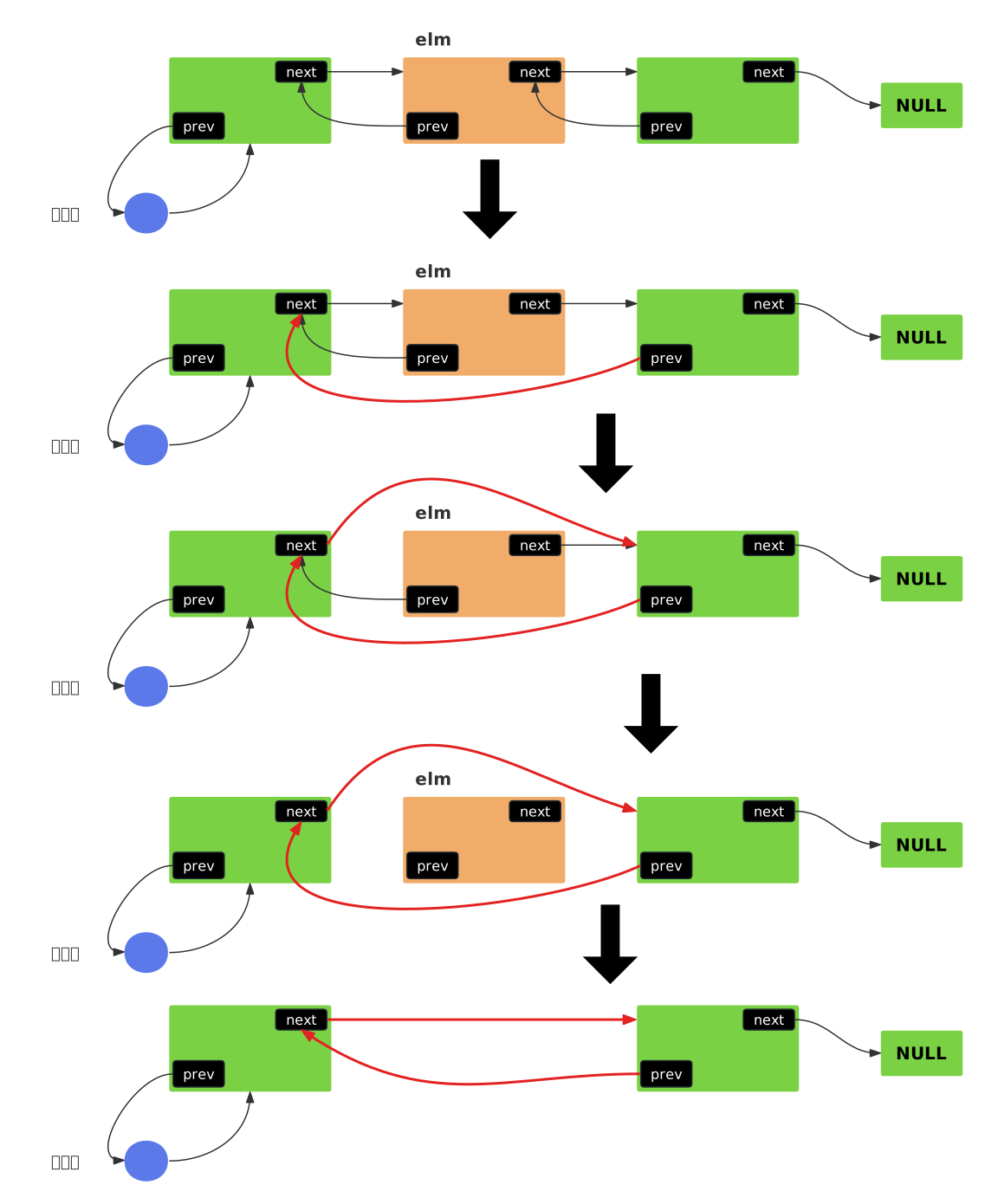
#define QLIST_REMOVE(elm, field) do {                                   \
        if ((elm)->field.le_next != NULL)                               \
                (elm)->field.le_next->field.le_prev =                   \
                    (elm)->field.le_prev;                               \
        *(elm)->field.le_prev = (elm)->field.le_next;                   \
        (elm)->field.le_next = NULL;                                    \
        (elm)->field.le_prev = NULL;                                    \
} while (/*CONSTCOND*/0)
|
- elm: 要移除的节点。
- field: 节点连接域。
2.5.2. 移除指定节点(安全版本)
 1
 2
 3
 4
 5
 6
 7
 8
 9
10
|
#define QLIST_SAFE_REMOVE(elm, field) do {                              \
        if ((elm)->field.le_prev != NULL) {                             \
                if ((elm)->field.le_next != NULL)                       \
                        (elm)->field.le_next->field.le_prev =           \
                            (elm)->field.le_prev;                       \
                *(elm)->field.le_prev = (elm)->field.le_next;           \
                (elm)->field.le_next = NULL;                            \
                (elm)->field.le_prev = NULL;                            \
        }                                                               \
} while (/*CONSTCOND*/0)
|
- 安全性考虑: 先判断elm节点是否存在,再进行删除。
- 删除节点: 和QLIST_REMOVE() 一样。
2.6. 遍历链表
1. 一般遍历
1
2
3
4
|
#define QLIST_FOREACH(var, head, field)                                 \
        for ((var) = ((head)->lh_first);                                \
                (var);                                                  \
                (var) = ((var)->field.le_next))
|
1
2
3
4
|
#define QLIST_FOREACH_SAFE(var, head, field, next_var)                  \
        for ((var) = ((head)->lh_first);                                \
                (var) && ((next_var) = ((var)->field.le_next), 1);      \
                (var) = (next_var))
|
- 安全性改进: 它支持在遍历过程中安全删除当前节点,在进入循环体之前,next_var 已保存下一个节点的指针,即使循环体内删除或修改了当前节点 var,next_var 仍指向下一个有效节点(不受 var 操作的影响),步进时直接使用 next_var,避免访问已释放的内存。
3. 使用宏遍历
遍历宏只是实现了for循环的for(;;;)部分:
QLIST_FOREACH:
 1
 2
 3
 4
 5
 6
 7
 8
 9
10
11
12
13
14
15
16
17
18
19
|
// 遍历所有注册的块设备驱动程序,找出最适合处理指定设备文件(如 /dev/cdrom)的驱动程序。
static BlockDriver *find_hdev_driver(const char *filename)
{
    int score_max = 0, score;
    BlockDriver *drv = NULL, *d;
    GLOBAL_STATE_CODE();

    QLIST_FOREACH(d, &bdrv_drivers, list) {
        if (d->bdrv_probe_device) {
            score = d->bdrv_probe_device(filename);
            if (score > score_max) {
                score_max = score;
                drv = d;
            }
        }
    }

    return drv;
}
|
QLIST_FOREACH_SAFE:
 1
 2
 3
 4
 5
 6
 7
 8
 9
10
11
12
13
|
// 从指定块设备状态(BlockDriverState)的操作阻塞列表中移除特定原因的阻塞项。
void bdrv_op_unblock(BlockDriverState *bs, BlockOpType op, Error *reason)
{
    BdrvOpBlocker *blocker, *next;
    GLOBAL_STATE_CODE();
    assert((int) op >= 0 && op < BLOCK_OP_TYPE_MAX);
    QLIST_FOREACH_SAFE(blocker, &bs->op_blockers[op], list, next) {
        if (blocker->reason == reason) {
            QLIST_REMOVE(blocker, list);
            g_free(blocker);
        }
    }
}
|
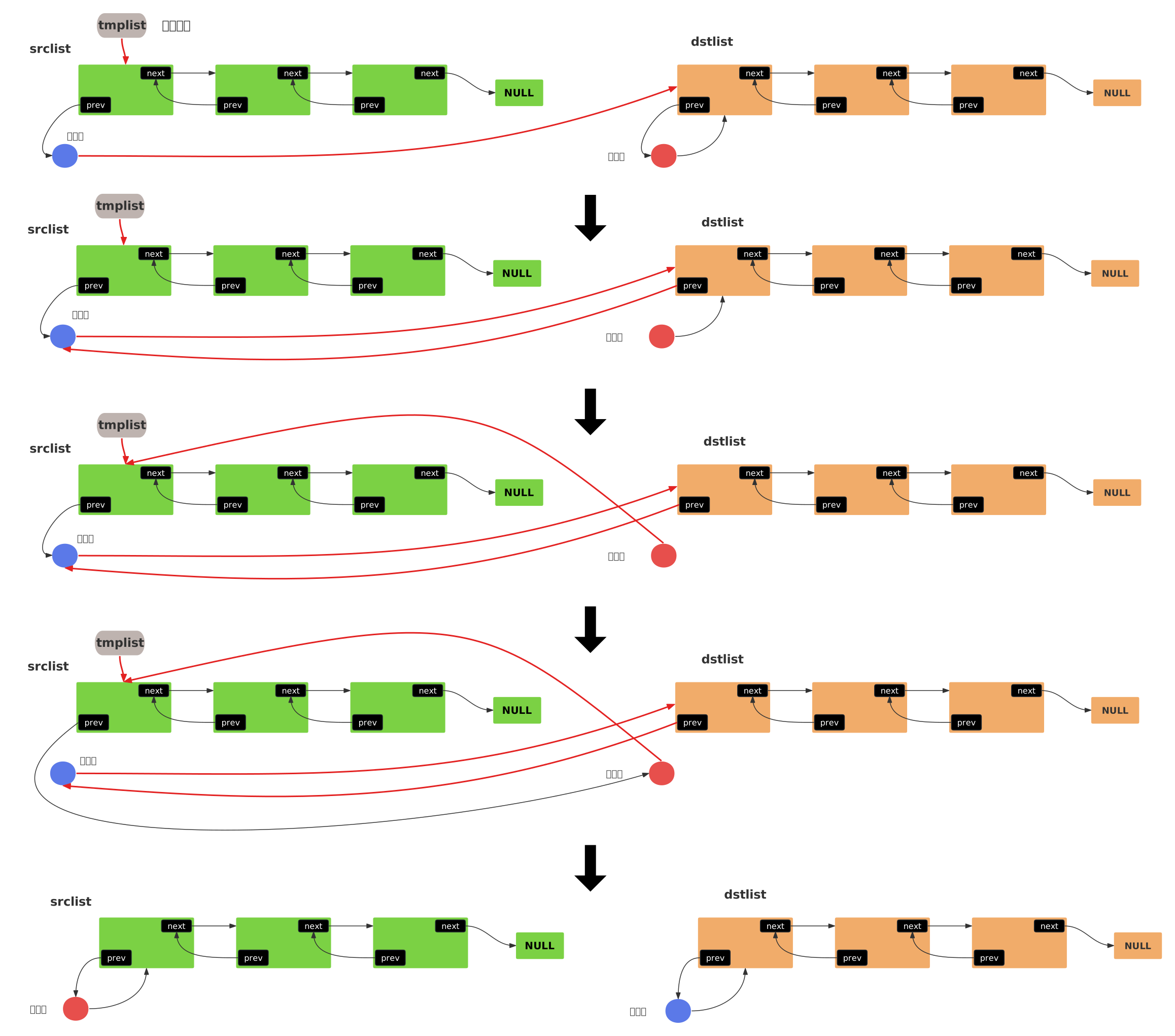
交换两个链表的全部节点
 1
 2
 3
 4
 5
 6
 7
 8
 9
10
11
12
|
#define QLIST_SWAP(dstlist, srclist, field) do {                        \
        void *tmplist;                                                  \
        tmplist = (srclist)->lh_first;                                  \
        (srclist)->lh_first = (dstlist)->lh_first;                      \
        if ((srclist)->lh_first != NULL) {                              \
            (srclist)->lh_first->field.le_prev = &(srclist)->lh_first;  \
        }                                                               \
        (dstlist)->lh_first = tmplist;                                  \
        if ((dstlist)->lh_first != NULL) {                              \
            (dstlist)->lh_first->field.le_prev = &(dstlist)->lh_first;  \
        }                                                               \
} while (/*CONSTCOND*/0)
|
我们以为两个非空链表为例:
3. 使用示例
3.1. 节点结构
 1
 2
 3
 4
 5
 6
 7
 8
 9
10
11
12
13
14
15
16
17
18
19
20
|
// thread-pool.h
typedef struct ThreadPoolElement ThreadPoolElement;

// thread-pool.c
struct ThreadPoolElement {
    BlockAIOCB common;
    ThreadPool *pool;
    ThreadPoolFunc *func;
    void *arg;

    enum ThreadState state;
    int ret;

    QTAILQ_ENTRY(ThreadPoolElement) reqs;

    /*
     * 节点的连接区域,每个节点通过该域连接前后相邻节点。
     */
    QLIST_ENTRY(ThreadPoolElement) all;
};
|
3.2. 链表头结构
 1
 2
 3
 4
 5
 6
 7
 8
 9
10
11
12
13
14
15
|
BlockAIOCB *thread_pool_submit_aio(ThreadPoolFunc *func, void *arg,
                                   BlockCompletionFunc *cb, void *opaque)
{
    ThreadPoolElement *req;
    // ......
    // 省略一堆代码

    /*
     * 链表头部保存在pool实例中。
     */
    ThreadPool *pool = aio_get_thread_pool(ctx);
    // .....
    QLIST_INSERT_HEAD(&pool->head, req, all);
    // ......
}
|
下面我们来看这个ThreadPool *pool是如何保存头部的:
 1
 2
 3
 4
 5
 6
 7
 8
 9
10
11
12
13
14
15
16
17
18
19
20
21
22
23
24
25
|
// thread-pool.h
typedef struct ThreadPool ThreadPool;

// thread-pool.c
struct ThreadPool {
    AioContext *ctx;
    QEMUBH *completion_bh;
    QemuMutex lock;
    QemuCond worker_stopped;
    QemuCond request_cond;
    QEMUBH *new_thread_bh;

    /*
     * 使用QLIST_HEAD宏创建一个链表,链表节点中所保存的元素类型为ThreadPoolElement。
     */
    QLIST_HEAD(, ThreadPoolElement) head;

    QTAILQ_HEAD(, ThreadPoolElement) request_list;
    int cur_threads;
    int idle_threads;
    int new_threads;
    int pending_threads;
    int min_threads;
    int max_threads;
};
|